How to Know If an Online Store Is a Scam Before You Buy
Online shopping makes it easy to find products, compare prices, and order almost anything from home.
But not every online store is legitimate.
Some websites are created to sell real products, while others may exist to collect payment information, steal personal data, or take money without delivering what was promised.
The good news is that you can perform a few simple checks before placing an order.
Here are 10 ways to spot a potentially fake online store before you buy.
1. Check the Website Address Carefully
Start with the store’s URL.
Scammers may create websites with addresses that look similar to legitimate brands.
Look carefully for:
- Misspelled words
- Extra characters
- Unusual domain names
- Strange subdomains
- URLs that don’t match the company name
Don’t judge a store only by its logo or design. Check the actual website address.
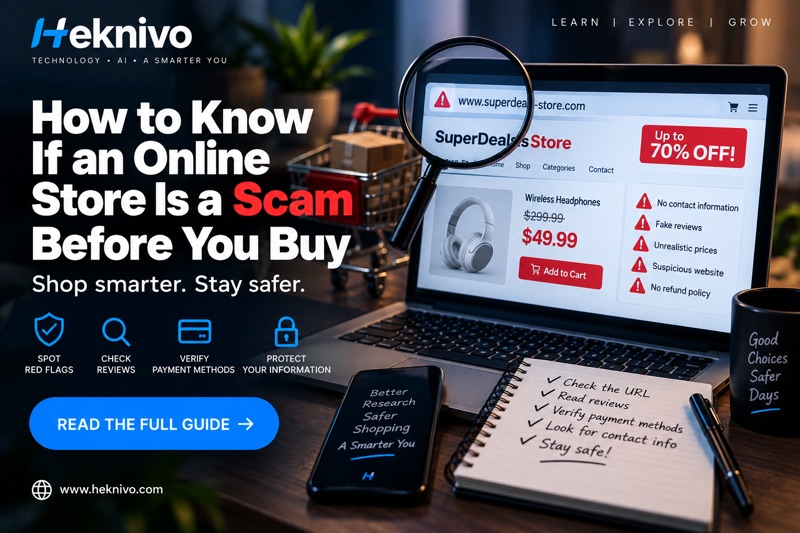
2. Be Suspicious of Extremely Low Prices
A huge discount can be tempting.
But if a product normally costs $500 and an unfamiliar store is selling it for $50, take a moment to investigate.
An unusually low price doesn’t automatically mean a store is fraudulent. It could be a genuine promotion or clearance sale.
However, large price differences are a good reason to compare the offer with established retailers.
3. Look for Real Contact Information
A legitimate online business should generally provide ways for customers to contact it.
Look for:
- Customer support information
- Contact email
- Phone number when appropriate
- Business address
- Refund information
Be cautious if a store provides only a generic contact form and gives no useful information about who operates the business.
4. Check the Refund and Shipping Policies
Before paying, find the store’s:
Refund Policy
Shipping Policy
Terms of Service
Read the important parts.
Look for information about delivery times, returns, refunds, cancellations, and who pays return shipping.
If the policies are copied, extremely vague, contradictory, or don’t make sense for the store, investigate further.
5. Search for Independent Reviews
Don’t rely only on reviews displayed on the store itself.
Search the store’s name along with terms such as:
“reviews”
“complaints”
“scam”
“customer experiences”
Look for information from independent sources.
Also remember that a few positive reviews don’t prove that a store is trustworthy. Look at the overall pattern and the quality of the feedback.
6. Check How Long the Website Has Been Around
A newly created website isn’t automatically a scam.
Many legitimate businesses are new.
However, if a store claims to have been operating for many years but its website appears to have been created recently, that’s something worth investigating.
You can use reputable domain-information services to research a domain’s history.
7. Don’t Assume HTTPS Means the Store Is Legitimate
You may see a padlock icon or https:// in the browser.
That’s useful because HTTPS encrypts the connection between your browser and the website.
But here’s the important part:
HTTPS does not prove that an online store is legitimate.
A fraudulent website can also use HTTPS.
Treat HTTPS as one security feature—not proof that you can trust the seller.
8. Check the Payment Methods
Pay attention to how the store wants you to pay.
Be particularly cautious if an unfamiliar store insists on unusual payment methods or asks you to send money directly.
Before purchasing, understand:
- What payment method you’re using
- Whether buyer protection is available
- How disputes are handled
- Whether the payment page belongs to the expected service
Avoid sharing payment information through ordinary messages or suspicious links.
9. Watch for Pressure Tactics
Scam websites may try to make you buy quickly.
You might see messages such as:
“Only 1 left!”
“You have 5 minutes!”
“Your discount expires now!”
These messages don’t necessarily prove fraud, but artificial urgency can make people skip important checks.
Take your time.
A few minutes of research can be more valuable than a supposedly limited-time discount.
10. Check the Product Information
Look closely at the product page.
Watch for:
- Poorly written descriptions
- Reused or inconsistent product images
- Missing specifications
- Incorrect brand information
- Prices that don’t match the product description
- Contradictory shipping information
If important details are missing, search for the same product on established websites and compare the information.
A Quick Online Store Safety Checklist
Before you buy from an unfamiliar store, ask yourself:
🔎 Is the URL correct?
💰 Is the price realistic?
🏢 Can I identify the business?
📦 Are shipping and refund policies clear?
⭐ Can I find independent reviews?
🔐 Is the payment process secure and understandable?
🚨 Is the website pressuring me to buy immediately?
📋 Does the product information make sense?
If several answers raise concerns, pause before making the purchase.
What If You Already Paid a Suspicious Store?
If you’ve already placed an order and now believe something may be wrong, act quickly.
Contact the Seller
Use the official contact information listed on the website and keep records of your communication.
Contact Your Payment Provider
If you paid by card or another protected payment method, contact the provider through its official website or app and explain the situation.
Ask about the options available for disputing the transaction.
Save Your Evidence
Keep:
- Order confirmations
- Receipts
- Emails
- Screenshots
- Product pages
- Tracking information
- Messages with the seller
This information may be useful when reporting the issue.
Protect Your Accounts
If you created an account using a password that you also use elsewhere, change that password on your other accounts.
Don’t Forget About Fake Social Media Stores
Not every scam starts with a website.
You may discover a store through:
- TikTok
- Online advertisements
A professional-looking social media account doesn’t automatically prove that the business is legitimate.
Before buying, investigate the actual store and payment process rather than relying only on the social media profile.
Final Thoughts
Online shopping doesn’t have to be risky.
The most important thing is to avoid making a purchase based only on a good-looking website, a huge discount, or an urgent offer.
Take a few minutes to check the URL, business information, reviews, policies, payment methods, and product details.
When something doesn’t add up, pause and investigate before you pay.
That small habit can help you avoid losing money and exposing your personal information.
🚀 More Digital Safety Guides From Heknivo
Want to stay safer online?
Read our other practical guides:
👉 How to Tell If a Website Is Safe Before You Use It
👉 What You Should Never Share With AI Chatbots
👉 10 Simple Ways to Protect Your Privacy Online
🌐 Visit Heknivo:
https://www.heknivo.com
Learn smarter. Shop safer. Stay informed.


Comments
Post a Comment